

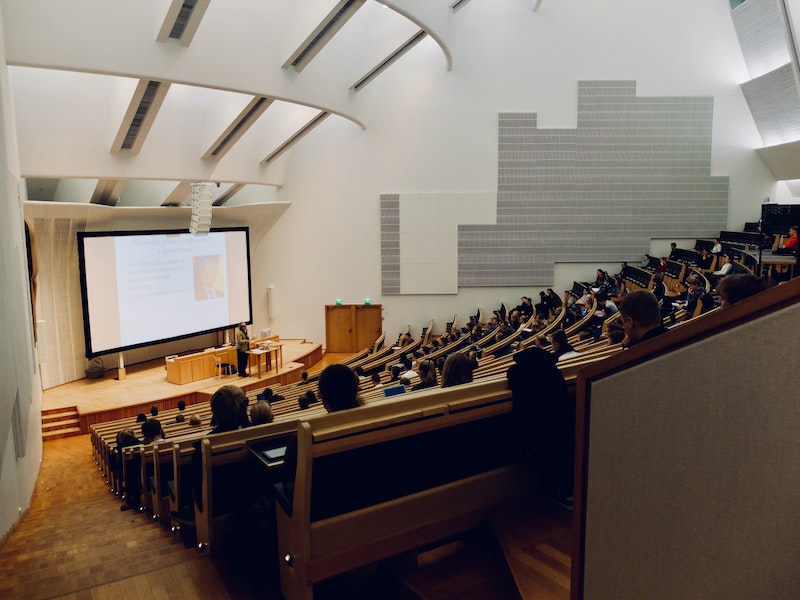
Installing a projection system means engineering a full experience with crystal-clear visuals, reliable performance, and smooth integration with sound, lighting, and control systems.
A sound system should deliver clear, consistent, and immersive audio that fits the space and the purpose. The sound systems balance design, hardware, acoustics, and control.
Let’s look at the projection system installation first
A Midwest Audio Visual projection job starts with a needs assessment and analysis of your Columbus space, including:
- Intended use: Will you be using it for presentations, education, displays, or events?
- Room size and shape: This will impact the best aspect ratio, or the ideal width and height of a screen. Larger screens help create a more immersive experience.
- Lighting conditions: Ambient light can compete with projected images, so reducing it will enhance quality and prevent wash-out.
- Audience layout: Seating arrangements influence viewing angles and the clarity and brightness of what is seen.
These factors help determine throw distance, brightness, screen size, and other important factors.
Next, we’ll help you select the right projector. We consider brightness, resolution, throw ratio, lens type, and whether laser or lamp technology is best for your needs.
After that, it’s time to choose a screen. Here are some screen options to consider:
- Mounting type: Do you need a screen that is fixed, movable, ceiling-mounted, retractable, or motorized?
- Size: Bigger isn’t always better. You want a screen that balances an immersive feeling with clarity and brightness for your space.
- Gain: This is how reflective a screen surface is compared to a standard white screen. A high gain means screens in rooms with ambient light may seem brighter but have lower viewing angles; low gain means steady color and brightness, but the screen may need more projector light.
- ALR (ambient light-rejecting): These screens are designed to display darker blacks and vivid colors by blocking natural or artificial light sources.
Once your equipment is determined, our installers will carefully mount your screen and projector with precise alignment, run cables, and connect to power. If needed, we will work with an electrician to ensure safety, proper load, and code compliance.
Touch panels, remotes, or room controllers are installed, with preset modes if desired, along with automation elements if they are part of your system.
The projection system is then tied into your existing sound system, or a new one.
Finally, we calibrate and test everything and provide user training so all users are comfortable with the new system.
What goes into a Midwest AV sound system installation
Just like a project system installation, we design and install sound systems with a proven process that is built just for you. Here’s what you can expect:
- Assessment: Just like with projection systems, we begin with a careful evaluation of your space. We evaluate the acoustic environment and check for echoes, sound-reflective hard surfaces, and ambient noises that could affect sound quality.
- Speaker selection: We will help you choose speakers that match power handling, sensitivity, intended use, mounting options, and frequency response to deliver clear, balanced sound.
- Amplifiers and digital signal processing: These components are the brains of the system that power the speakers, balance levels, remove feedback, and manage inputs. In addition, they shape sound, delay timing, and handle zoning.
- Microphones and input devices: Whether for speech, music, or both, these components should offer great performance and system integration.
- Speaker placement and coverage mapping: Precise placement is critical. Midwest sound system installers use software to map sound coverage and avoid dead zones, angle and position speakers to avoid reflections or echoes, and balance zones so sound doesn’t drop off or overlap oddly.
- Mounting and cable routing: Speakers and equipment are safely and securely mounted and wired, with clean cable routing that never gets in the way.
- Control system integration: Operating your system should be intuitive, so we integrate a system that makes it easy to adjust volume, switch sources, and manage zones.
- Calibration, testing, and user training: We always complete an installation with fine-tuning to ensure great performance, then walk your team through controls for confident system operation.
If you are considering a new projection or sound system for your Columbus space, reach out today. We can help with each decision to ensure you get a system that fits your room and your budget.